
Jenson
Category : Historical Studies
FRAGMENTS

Since I had become an addict of beautiful Roman Type it came quite natural to me being also an ardent admirer of the, in my eyes, only valid re-cut of this typeface: the Centaur by the American type designer (his typeface came consciously to my eyes for the first time in a beautiful photo set1 printed calendar about Anselm Adams). In my first years as a student of historical typefaces I began with using digital version and adjusting its letter spaces to get closer to the rhythm that I felt more appropriate for it. For that purpose I scanned old hot metal type set pages in Centaur and used complicated methods to adapt kerning in the in those days available layout programs as QuarkXPress. My knowledge around typeface designing techniques at this time was very rare but it helped me getting kind of a first feeling for what later would have become a live long passion.
Some time later when I was engaged in the encouraging project of at Verona, Italy, the VAL (Valdonega Aesthetic Line) font library I had the great luck to come to meet this legendary typeface again. It became my favorite of the VAL fonts bringing me to even invent new special methods in digitalizing those hot metal printed characters and to give them back something of the appearance they once had.
Find in the following some images and brief explanations about my researches on the Centaur typeface.
1 – This refers to an older photocomposition technique where the letters actually were hand drawn oversized templates and then photomechanically reduced and set into words and phrases. Outlines of letters weren’t hat perfectly digitally “polished”, indeed they showed edgy details as if scratched on the outside when looked upon carefully in the enlargement.

Centaur VAL (Valdonega Aesthetic Line) 14–16pt Size · Hot Metal Page Facsimile [p.150, Candide ou l’optimisme, , 1944]

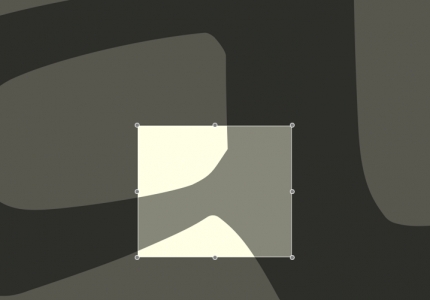
Rogers Centaur ‘a’ ·

Rogers Centaur ‘a’ · Digital Raster* Curve Points
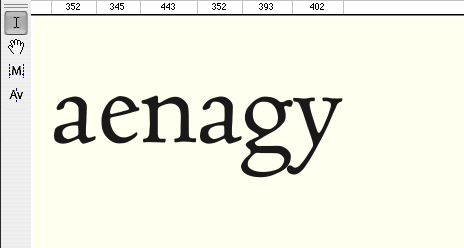
Rogers Centaur Letters · Metrics Window
* In order to take more control over the digital raster and how the letter images were exposed I implemented small curve segments of nearly same length, and also straight lines were split into segments with strictly parallel handles.
Of course printed only in the exact intended font size, this gave us far better, “natural” results then the usual (correct) Bézier methods. The overall text impression in mass was more “black”, letters were less “washed out”.
did the Centaur font from designs he made by hand of Jenson’s character. He was a very unpretentious man and I believe its partly because of his character as a man that his font became one the most beautiful redesigns of a storic printing typeface. For he didn`t run into the errors that one is easily to commit emphasizing too much the intellectual idea of a character design. As Rogers was known had once said that he didn`t intent to design a new typeface but simply tried to copy in the best way he could an already perfect existing one.
The Centaur type is far more lovely than Jenson – more precise in its understanding of Jenson’s calligraphically inspired letters. Certainly in the digital versions nowadays existing it is way too thin and edgy.
A good example for what can make suffer a font due to misunderstood detail treatment. Its serifs for example were never meant to end so sharply cut and also the points were the calligraphic pen would turn outlines from one into another are far too abrupt and abstract. This is in part because of the rational digitizing and in part because of the lack of understanding it well.
As you can easily convince yourself linking to internet forums of today it has never lost its fascination and inspiring energy. There are people all over the world that are willing to sacrifize their spare time to redesign its curves, to look behind its secrets and feel themselves part of its intriguing story since the day in deep Renaissance age undertook this adventure of designing by hand the first printing type in history ever. Or neither he didn’t design it, yet struck it directly into steelpunches.